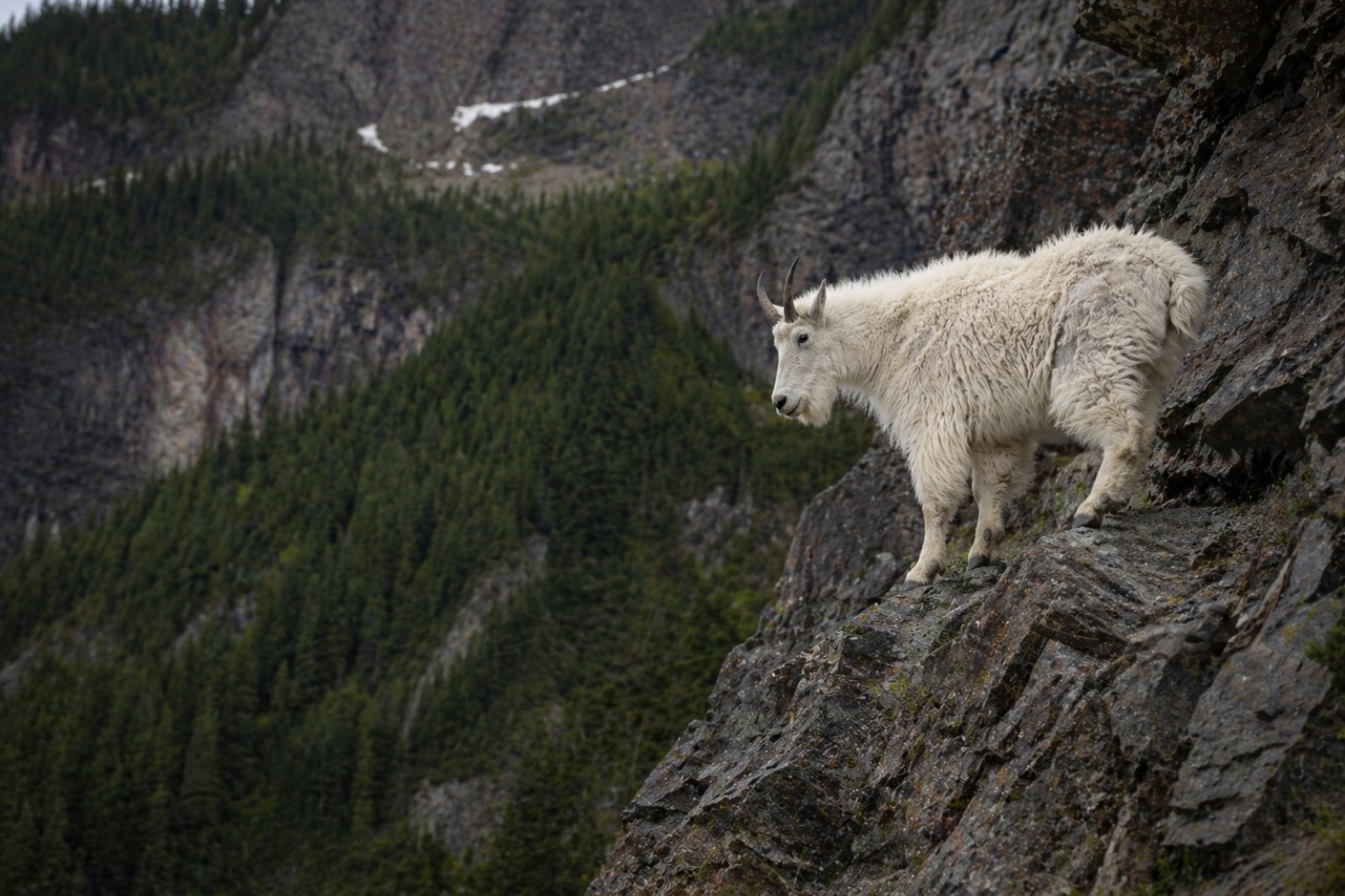
BC is one of the most important mountain goat jurisdictions in North America, but goat hunting is not casual mountain tourism. It is steep, weather-sensitive, physically serious, and heavily dependent on access, guide judgment, and conservative harvest decisions.
Best fit: prepared mountain huntersPrimary window: September and OctoberKey variables: terrain, weather, access, fitness
Species Context
Goat Country Is the Filter
Mountain goats are built for steep, rocky terrain, with specialized hooves, powerful shoulders, and a low center of gravity that lets them live in country most hunters only visit with intent. BC supports a major share of North America's mountain goat population, with goats present in most mountain ranges except Vancouver Island, Haida Gwaii, and most other coastal islands, according to BC species distribution guidance.
A mountain goat hunt should be judged by terrain, access, weather exposure, guide experience, age and sex identification discipline, and your ability to keep hunting when the mountain gets uncomfortable. It is one of the clearest examples of why fit matters before price.
Planning Details
What Changes a BC Goat Hunt Most
Steep Terrain
The mountain is the hunt. Daily effort, exposure, footing, and descent difficulty matter as much as spotting goats.
Weather
Fog, snow, rain, wind, and changing visibility can delay glassing or make a route unsafe.
Access
Horseback, backpack, boat, fly-in, road-assisted, and spike-camp formats create very different demands.
Judgment
Sex and age identification are important. Responsible goat hunting requires patience and careful decisions.
Pack-Out
Steep recovery and meat care can be a serious part of the hunt. Support structure matters.
Backup Plans
Weather days, alternate basins, and safety choices should be discussed before a deposit is sent.
Decision Context
Where to Start Comparing Goat Hunts
Skeena
Remote mountain country, serious access, and strong alpine identity.